What if fostering togetherness meant designing for less attention, not more?
Skills
Physical Computing
Prototyping
Fabrication
User Testing
Tools
Arduino
Stepper Motors
Laser Cutter
Team / Instructors
Alec Davis
Chokchey Cappai
Wayne Kim
Massimo Banzi
Pierluigi Dalla Rosa
Jose Chavarria
Duration
2 weeks, 2025

Concept
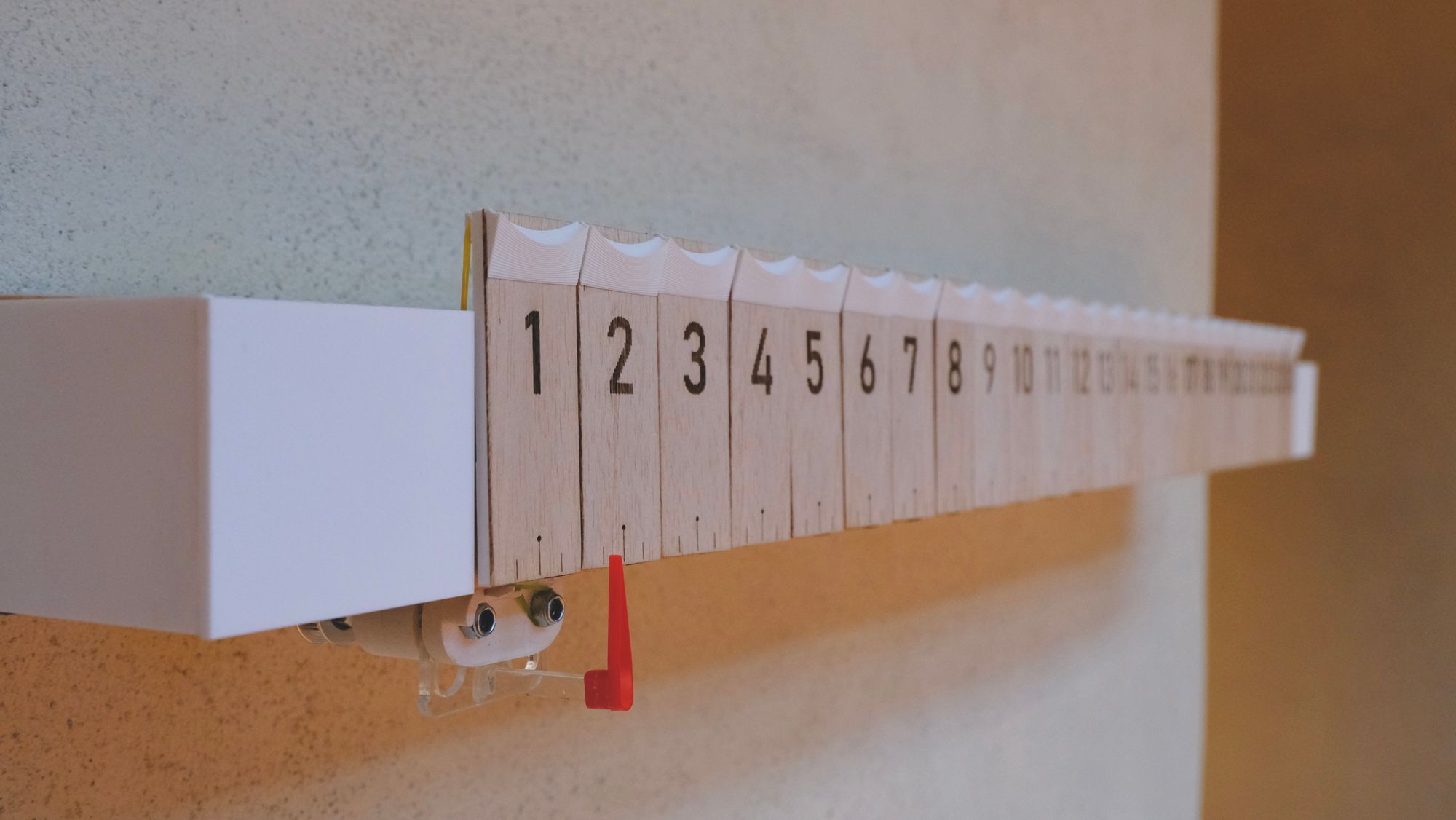
Linee (Italian for “lines”) is a tactile clock and intentionally low-fidelity daily planner designed for shared living spaces. It offers a quiet, physical way to indicate when something is happening, without alarms, screens, or notifications. Instead of precise scheduling, Linee supports awareness of daily rhythms, helping people stay in sync while preserving calm and presence.
Helping housemates stay in sync
Our brief was to design a product that fosters togetherness in shared spaces. While home is often a sanctuary for people with busy schedules, sharing it still requires subtle coordination. We initially imagined Linee as a way for housemates to signal everyday rhythms, when someone might be in the kitchen, using the shower, or arriving home.
Linee explores an alternative: ambient timekeeping, a system that communicates when without demanding attention. Coordination becomes something felt over time, rather than enforced through alerts.
Fostering a shared language
Linee includes rewritable magnetic tiles that can be placed along the timeline to add notes, symbols, or loose intentions.
Rather than enforcing schedules, Linee makes time legible, open to interpretation and negotiation. These tiles can communicate moments like shared meals, casual check-ins, personal rituals, or even when it’s time to walk the dog.

Interaction Model
Each hour is represented by a wooden time block that can be pressed to mark an event. As the clock’s needle moves, it triggers a soft, physical knock when it passes a pressed block, creating a gentle moment of recognition rather than an alert. Semi-transparent numerals allow light to pass through, offering subtle visibility without becoming a focal point.
Making the System real
Linee runs on a WiFi-connected Arduino, using a stepper motor and belt to move a small flipper mechanism across the timeline, popping up blocks as it passes them. We calculated that it takes 2,200 motor steps to traverse the full width of the track. At the end of each pass, the system hits a limit switch and reverses direction. When powered on, Linee retrieves the local time, positions itself accordingly, and then continues moving at the speed of time, completing one full pass every 24 hours.


Iteration
Over the first few days, we created dozens of prototypes for the hour blocks, exploring how subtle changes in form affected interaction. Through testing with classmates, we found that a protruding notch afforded pushing both down and slightly inward, allowing blocks to clearly engage or disengage.

Just put it in the box(!!!)
One of our most important lessons emerged during physical prototyping: “just put it in the box.” Many practical challenges, such as component fit, material strength, and tolerances, only became clear once we assembled the system in near-final form.

Massimo gently reminding us to stop sanding little pieces of wood and "put it in the box" (he was right).
On display during exhibition
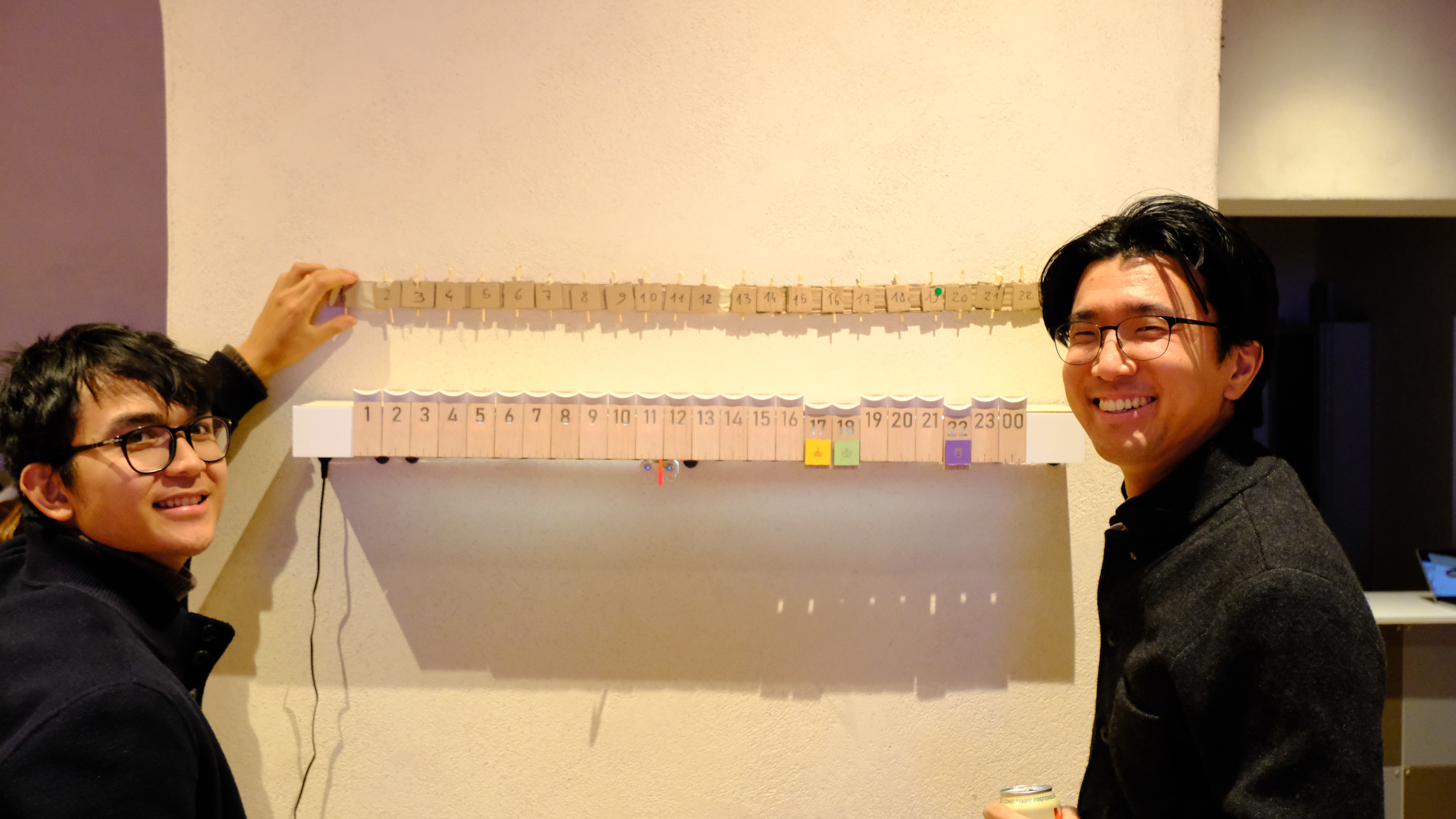
1st prototype to the final form